Cowtail Brush: The Vintage Charm of Hand-Painted Typography
In a digital landscape saturated with clean, geometric fonts, the authentic warmth of hand-painted lettering is a powerful way to make a design stand out. The Cowtail Brush Sign Font is a meticulously crafted typeface that captures the soul of vintage sign painting, offering designers a tool to infuse projects with personality, nostalgia, and an unmistakable human touch. It’s more than just a font; it’s a bridge between classic craftsmanship and modern visual design.
Understanding the Craft: What Makes Cowtail Brush Special?
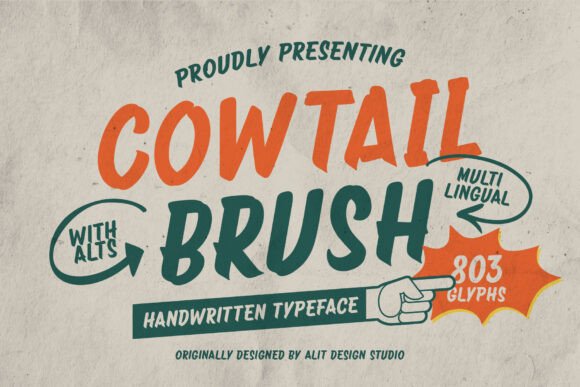
At its core, Cowtail Brush is a display typeface inspired by the fluid, expressive strokes of traditional brush lettering. Unlike standard script fonts, it mimics the natural variations and organic curves of a real brush, complete with subtle texture and pressure changes. This authenticity is what makes it so effective. In graphic design, typography isn't just about readability; it's about conveying emotion and setting a tone. Cowtail Brush excels at communicating authenticity, craftsmanship, and a retro-modern aesthetic.
Its extensive character set of over 800 glyphs, including ligatures and alternates, is a significant advantage. This allows for incredible customization, preventing the repetitive, "digital" look that can plague script fonts. Designers can mix and match characters to create truly unique wordmarks and headlines, ensuring each letterform feels hand-crafted for the specific project.
Practical Applications Across Design Disciplines
The versatility of Cowtail Brush makes it a valuable asset across a wide range of creative projects. Its primary strength lies in applications where personality and impact are paramount.
- Brand Identity & Logo Design: A logo sets the first impression. Cowtail Brush can establish a brand as approachable, artisanal, or vintage-inspired, perfect for boutique shops, craft breweries, or lifestyle brands.
- Packaging Design: On shelves crowded with minimalist sans-serifs, a textured brush font can instantly draw the eye. It communicates quality and handcrafted care, ideal for food products, cosmetics, and artisanal goods.
- Marketing & Social Media: Headlines and call-to-action text in advertisements, posters, and social media graphics gain immediate visual hierarchy and engagement. The font’s texture ensures it pops even in busy digital marketing feeds.
- Editorial & Web Design: Used sparingly for pull quotes, subheadings, or hero text, it adds a dynamic element to editorial layouts and web design, breaking the monotony of body copy without sacrificing overall clarity.
Integrating a Script Font into Your Design Workflow
While a powerful asset, using a display font like Cowtail Brush effectively requires thoughtful implementation. Here are key considerations for your design workflow:
- Prioritize Readability: Reserve Cowtail Brush for short, impactful text—logos, titles, and accents. For body copy, pair it with a highly legible sans-serif or serif font to maintain a clear visual hierarchy.
- Mind the Context: Assess if the vintage, hand-painted style aligns with your audience and project goals. It’s perfect for evoking nostalgia or craftsmanship but may not suit a sleek, corporate tech startup.
- Test Scalability: Always test the font at the sizes it will be used. The fine details that look beautiful on a poster may become illegible at a small size on a mobile UI design element.
- Harmonize with Your Color Palette: The font’s character can be enhanced by complementary colors. Think earthy tones for a rustic feel or bold contrasts for a modern retro vibe.
Ultimately, the choice of typography is a fundamental decision that shapes a project’s entire aesthetic and communicative power. Quality creative assets like Cowtail Brush Sign Font provide designers with the means to elevate their work beyond the ordinary. By thoughtfully integrating such resources, you can create visuals that not only catch the eye but also resonate emotionally, strengthening brand identity and ensuring your message is both seen and felt. In the realm of visual communication, that human touch is often the most powerful element of all.